
The event between past and future: what you cannot afford not to be aware of
The events industry is undergoing a profound transformation. Over the past twenty years, the Private Events sector and its related professions have evolved significantly, affecting both client…
Condividi questo articolo:
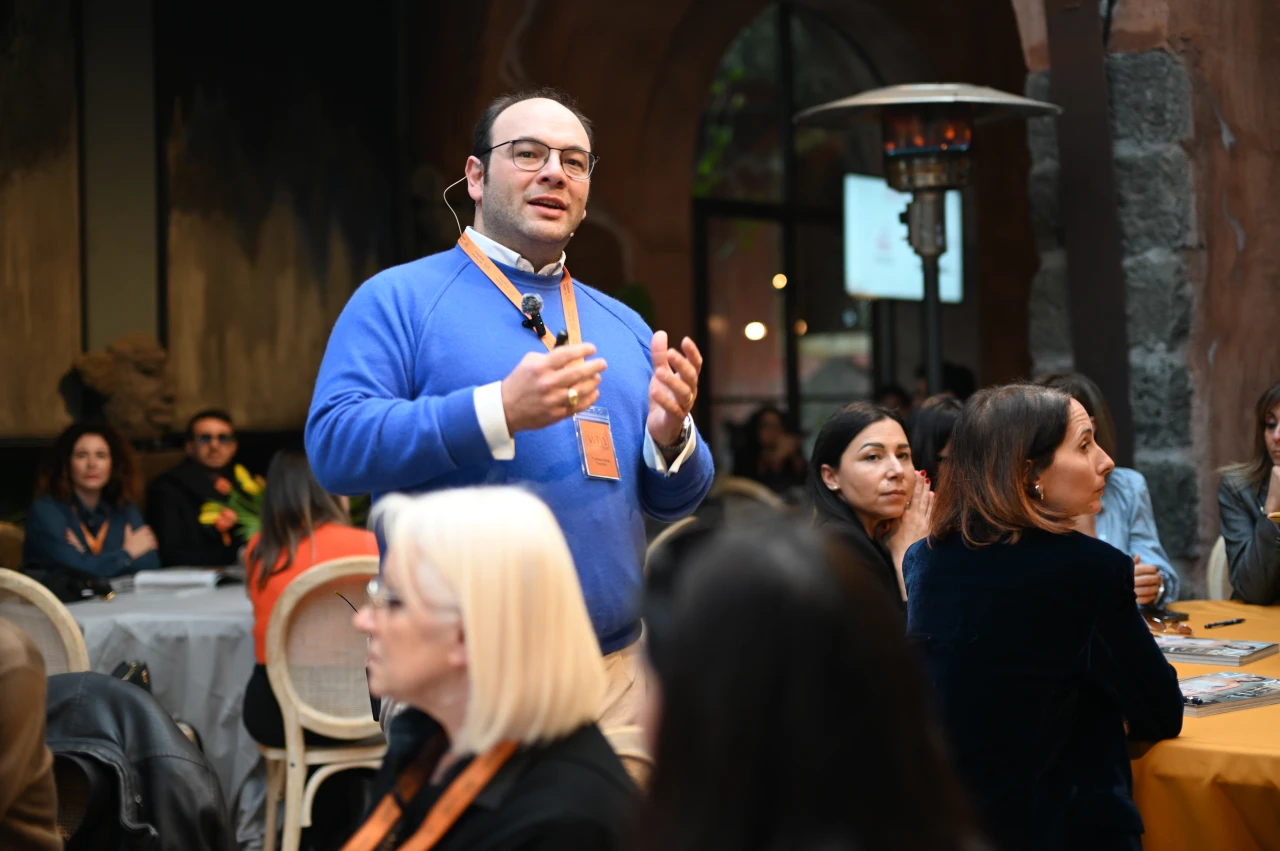
The events industry is undergoing a profound transformation. Over the past twenty years, the Private Events sector and its related professions have evolved significantly, affecting both client perception and the structure of the entire supply chain.
Today, we are witnessing increasing specialization among operators, growing complexity in supply chain management, and a rising impact of new technologies. In this context, it becomes essential to understand where the industry is heading and which levers will shape its future. We spoke with Tommaso Corsini, Founder and CEO of WIM.
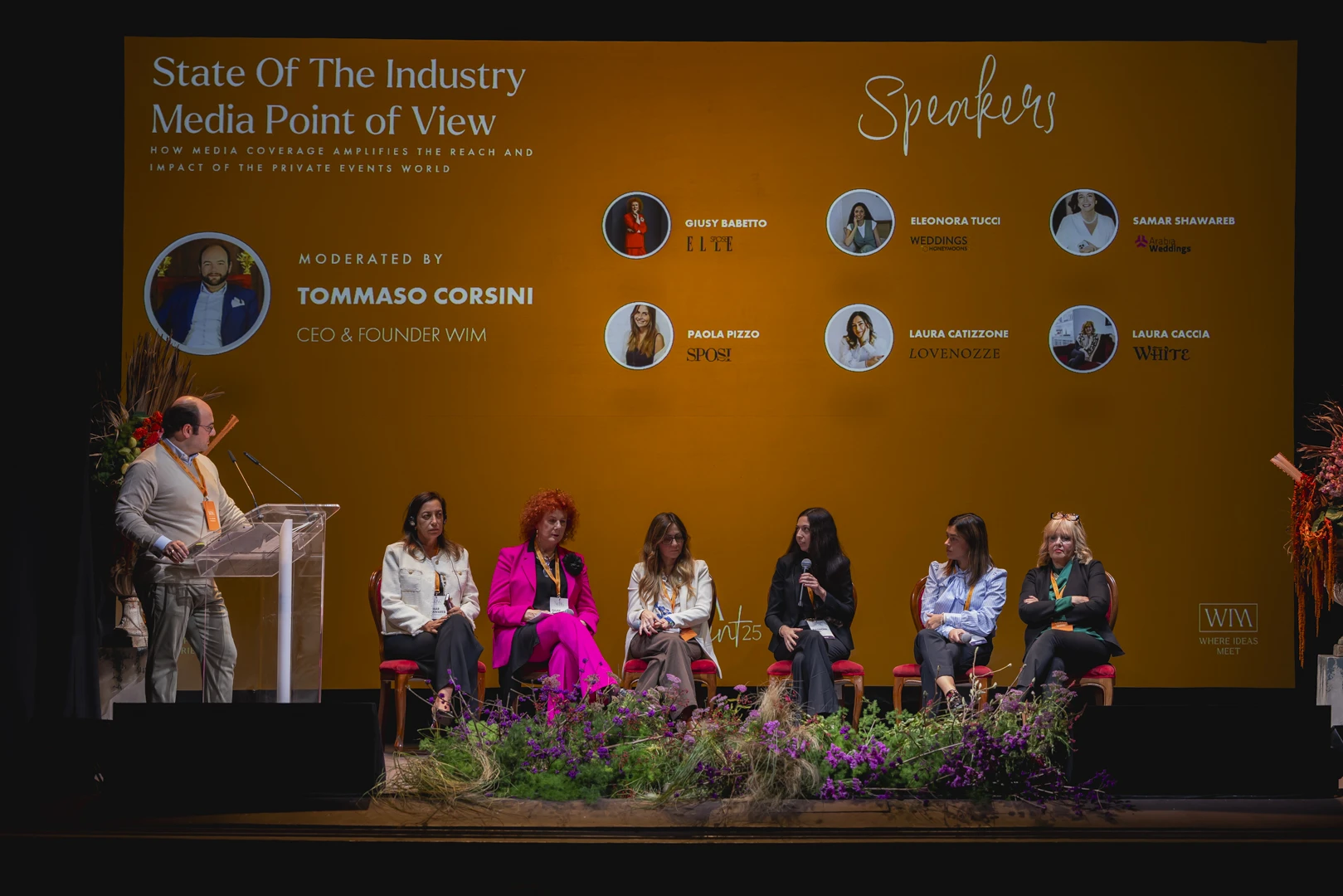
The WIM Tour26 has just concluded: 18 stops across Italy and internationally, where you met over 1,500 professionals in less than four months. WIM is now the largest network in Italy in terms of size and market knowledge. Where is the events industry heading, in your view?
The evolution is already underway, and its direction is very clear: digitalization. I am not referring only to communication, but primarily to structure. Companies in the sector—regardless of size—are beginning to understand that the real leap forward is no longer purely creative or commercial, but organizational.
Those who are investing today in digital tools to:
- manage clients
- control processes
- standardize activities
- automate operational functions
are building a real competitive advantage.
This leads to reduced improvisation, greater control capacity, and above all, a key element: trust.
- A more structured industry is a more reliable industry.
- And a more reliable industry is a growing industry.
Let’s talk about growth: is this market really expanding?
Yes, and this is not just perception. It is supported by multiple levels of analysis. Macroeconomic indicators, supply and demand dynamics, and especially the studies conducted through WIM Insights all point to a clear picture: demand is increasing.
What are the main drivers of this growth?
There are several, but some are particularly significant.
The first is related to the evolution of capital. We are witnessing growth in high-net-worth individuals, as well as stabilization—and in some cases growth—of the upper-middle class. This generates broader and more complex demand, both nationally and internationally. In this sense, Italy holds a particularly strong position, as it is a globally recognized and highly desirable destination.
The second driver is the value of celebration. Events—whether private or corporate—remain central moments in people’s and organizations’ lives. They are not replaceable.
The third is personalization. The demand is no longer for a “well-executed event,” but for a unique one. This fundamentally reshapes the market, making standardization impossible and opening growth opportunities based on quality.
So is growth driven only by high capital segments?
No, and this is an important clarification. There is another, perhaps even more interesting component: communication. Today, events and communication are deeply interconnected. Both individuals and companies need to build a digital identity, and to do so they require content. Events are among the most effective tools for generating valuable content. Not only for organizers, but also for participants. Guests themselves become active contributors, amplifying content through their own channels.
A system is created in which:
- the event generates content
- content generates visibility
- visibility generates value
And this value is not only economic, but also social and cultural.
There is also another key aspect: the communication of supply. Industry professionals, media, and operators are increasingly structuring how they communicate what they do. This is directly influencing client decisions. Demand no longer solely drives supply. Supply increasingly shapes demand. This occurs primarily through a highly visual language, especially dominant among younger generations.
Is this change temporary or structural?
It is structural.We are not facing a trend, but a shift in consumption models. People are moving from ownership to experience. We see this clearly even in major luxury brands, which are increasingly investing in experiential strategies. Today, perceived value lies not in possession, but in lived experience.
People are seeking:
- uniqueness
- exclusivity
- authenticity
And, ideally, something that cannot simply be purchased—something tied to time, our most limited resource. We live in a society saturated with stimuli, which is leading to a renewed focus on the individual, personal balance, and the quality of time.
In this context, experience becomes central. And among all possible experiences, events have a unique characteristic: they are real, unrepeatable, and shared.
What role will events play in an increasingly digital and technological future?
Paradoxically, an even more central one. In a world where artificial intelligence and virtual reality will make many experiences increasingly replicable, what is real will become even more valuable.
By definition, an event is:
- non-replicable
- non-standardizable
- non-substitutable
For this reason, it will become increasingly relevant. Not only as a moment of celebration, but as a tool for identity building. Because today—even for those who “have nothing to prove”—there remains a social, relational, and communicative dimension that must be managed. And events are one of the most powerful tools to do so.
In this scenario, what is WIM’s role?
WIM was created precisely to respond to this complexity. The events sector has grown significantly in recent years, but in a fragmented way.
There is still a lack of:
- a shared structure
- a common language
- organized access to knowledge
What we are building with WIM is an infrastructure.
A place where:
- operators can connect
- expertise can be shared
- the industry can begin to understand itself more consciously
Through WIMforPRO, WIM Insights, and physical events, we are working to give shape to something that does not yet fully exist: a true industry. This is a fundamental step. Because only an industry that recognizes itself as such can grow in a structured way, attract value, generate opportunities, and build its future.
Final question: what would you say today to someone working in this sector?
That this is a moment of choice. To continue operating as before—more or less effectively—or to begin structuring, connecting, and evolving.
The market is changing.
Clients are changing.
Tools are changing.
Those who can read this transformation will not only grow, but will actively contribute to defining the future of the industry. Those who do not risk being left behind.
And today, more than ever, it is no longer a question of talent.
It is a question of system"
Condividi questo articolo:
Diventa un
Digital Wimmer
Contenuti esclusivi, community e accesso anticipato agli eventi — tutto in un unico posto.



WIM For PRO · Where Ideas Meet
Sei già un
Digital Wimmer?
Community
Forum, directory e networking tra i professionisti del settore
Insights PLUS
Report esclusivi, WIM Survey e contenuti editoriali riservati
Priorità eventi
Accesso anticipato a tutte le tappe Tour, Talks e WIM Event
WIM For PRO · Where Ideas Meet
Are you already aDigital Wimmer?
Community
Forums, directories, and networking among industry professionals
Insights PLUS
Exclusive reports, WIM Surveys, and exclusive editorial content
Event priority
Early access to all Tour, Talks, and WIM Event sessions
Tutti i dettagli relativi ai vantaggi delle membership e al pricing dell’evento sono disponibili nel kit evento. Per qualsiasi necessità, assistenza o richiesta di approfondimento, puoi contattarci in qualsiasi momento scrivendo a info@wimforevents.com