
617 Companies Under the Lens: Who They Are, How They Operate, Where They're Going.
That's the number of companies that responded to the WIMSurvey25, the first systematic quantitative study on the Italian private events industry, conducted by the University of Siena with the…
Condividi questo articolo:
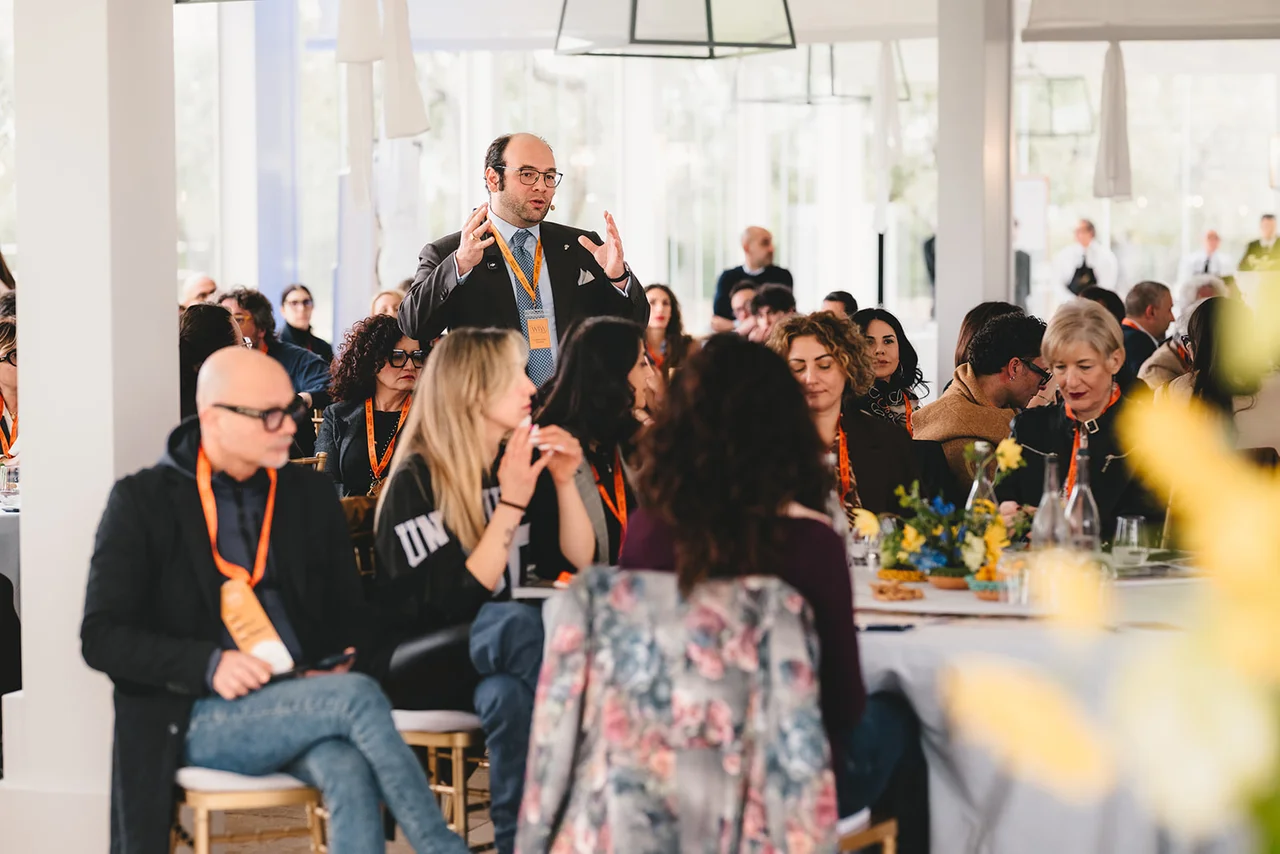
That's the number of companies that responded to the WIMSurvey25, the first systematic quantitative study on the Italian private events industry, conducted by the University of Siena with the scientific support of Professors Lorenzo Zanni and Alberto Massacci of the Department of Business Sciences.
This number isn't large in absolute terms — it represents about 1.2% of the more than 50,000 companies estimated in the sector. But in the context of an industry that had never been the subject of a systematic study, it's the most solid starting point that exists today. It's the first structured snapshot of a sector that until yesterday had never seen itself in the mirror.
In this article we tell you what these 617 respondents reveal: who they are, how they're structured, where they operate, what they do, and above all how they look at the future.
Who Responds: The Sample Structure
The sample distributes across three macro-clusters of activity: Organization (47.8%), Service Supply (29.7%), and Location (22.5%). This distribution reflects the structure of the supply chain — with organizational direction representing nearly half, technical and creative services nearly a third, and venues completing the picture.
From a legal standpoint, 59.5% operate as freelancers or sole proprietors. Limited liability companies (Srl) represent 28.7%, concentrated mainly in the Location segment, where managing a physical asset requires a corporate structure. The remaining legal forms — partnerships, cooperatives, others — have residual incidence.
Most companies in the sample were founded after 2010. The industry is young, with marked generational turnover. But average seniority varies significantly by cluster: companies in the Location cluster tend to be older on average, because the more substantial initial investment creates an entry barrier that favors stability over time.
Where They Operate: The Geography of the Sample
Geographic distribution is one of the most interesting — and most cautiously read — elements of the sample.
Tuscany represents nearly 24% of the sample, followed by Lombardy at 15.9% and Veneto at 8.4%. This reflects the geographic rooting of the WIM network, whose epicenter is in Tuscany. It isn't a proportional representation of the Italian sector.
That said, the regional distribution tells something interesting about the vocation of different territories. Tuscany shows a balanced distribution between Organization and Location, with a strong international vocation. Lombardy is dominated by Organization and Services, with a corporate and business vocation. Veneto has a relatively higher presence of Location, with an identity tied to the Padua-Veneto destination and premium agriturismo.
Southern regions — Sicily, Puglia, Campania — appear in the sample to a lesser extent (4-6% each), with predominantly consultative organization and a Location potential still largely untapped. It's one of the most significant gaps between the real potential of these territories and the current structure of the supply chain.
What They Do: Markets Served
Weddings are the absolute center of gravity of the industry: over 70% of companies in the sample work with weddings. Destination weddings are present in 54.8% of companies and constitute the real growth indicator: as the average event budget grows, the share of weddings following international service standards grows dramatically.
Private and family celebrations — anniversaries, milestone birthdays, special occasions — are present for 46% of the sample. Corporate relational events — gala dinners, incentive trips, product launches, team building — for 31%. Conferences and trade fairs are marginal, below 10%.
In terms of internationalization, North America (35.7%) and UK-Ireland (28.7%) are the structural foreign markets. Central-Northern Europe, Central and South America, Australia and New Zealand complete the picture of the most significant foreign origins. APAC and Middle East are still below 5% but growing rapidly.
How They Invest: Priorities for 2025-2026
The WIMSurvey25 asked operators where they intend to invest in 2025-2026. The answers reveal an industry oriented toward the market more than toward internal organization.
Communication and branding is the top declared priority, with over 66% of the sample. It's followed by product-service innovation (45%), process-organizational innovation (40%), training (38%), international commercial development (30%), operational digitalization (25%), and new personnel and infrastructure (20-25%).
The most paradoxical data point: operational digitalization — adopting CRM, management software, project management tools — sits at the bottom of the planned investments list. Paradoxical because, as the digital adoption data shows, this is exactly the most urgent gap to close in order to compete in international markets.
How They Look at the Future: Growth Expectations
The industry perceives itself as expanding. The share of companies that anticipate growth — moderate or significant — clearly outweighs those expecting stability or decline.
The Organization cluster shows the most marked optimism. The Location cluster shows a more balanced distribution between growth and stability, consistent with greater structural rigidity and higher fixed costs.
This optimism is fundamentally justified: data on global HNWI demand, on experiential luxury, and on internationalization confirm that the market in which this industry operates is structurally growing. Demand is there. The challenge is organizing to capture it.
Continua a leggere...
Questo contenuto è riservato. Accedi alla nostra piattaforma per leggere l'articolo completo.
Prosegui su WIM for ProRead more...
This content is for members only. Log in to our platform to read the full article.
Proceed to WIM for ProCondividi questo articolo:


Diventa un
Digital Wimmer
Contenuti esclusivi, community e accesso anticipato agli eventi — tutto in un unico posto.









WIM For PRO · Where Ideas Meet
Sei già un
Digital Wimmer?
Community
Forum, directory e networking tra i professionisti del settore
Insights PLUS
Report esclusivi, WIM Survey e contenuti editoriali riservati
Priorità eventi
Accesso anticipato a tutte le tappe Tour, Talks e WIM Event
WIM For PRO · Where Ideas Meet
Are you already aDigital Wimmer?
Community
Forums, directories, and networking among industry professionals
Insights PLUS
Exclusive reports, WIM Surveys, and exclusive editorial content
Event priority
Early access to all Tour, Talks, and WIM Event sessions
Tutti i dettagli relativi ai vantaggi delle membership e al pricing dell’evento sono disponibili nel kit evento. Per qualsiasi necessità, assistenza o richiesta di approfondimento, puoi contattarci in qualsiasi momento scrivendo a info@wimforevents.com