
The Dual Soul of Purchasing: Who Searches Isn't Always Who Decides. How to Communicate to Both.
The Dual Soul of Purchasing: Who Searches Isn't Always Who Decides. How to Communicate to Both.
There's a complexity in the private events industry's purchasing process that is rarely analyzed with the clarity it deserves: in most cases, the person who searches isn't the same person who…
Condividi questo articolo:
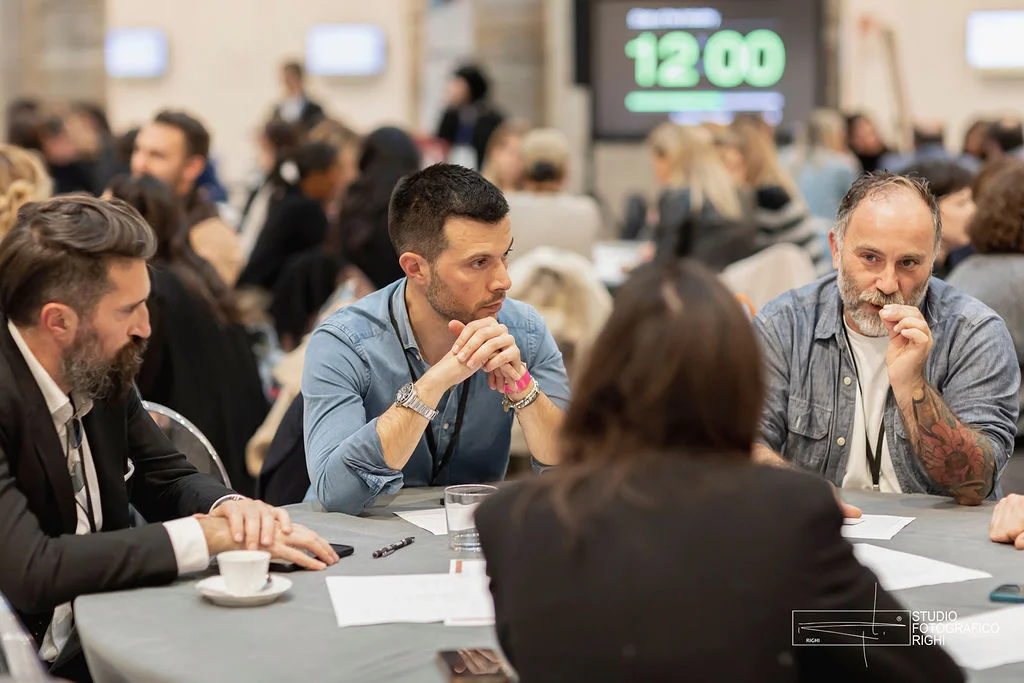
There's a complexity in the private events industry's purchasing process that is rarely analyzed with the clarity it deserves: in most cases, the person who searches isn't the same person who decides, and isn't the same person who pays.
This discrepancy isn't a marginal detail. It's one of the main reasons many communication strategies in the sector work poorly: they speak to the wrong person, at the wrong moment, with the wrong message.
The Three Roles in the Purchasing Process
In a typical purchasing process for a high-value event, three distinct roles can be identified that rarely coincide in the same person.
The Searcher is who does the initial research. In the case of a wedding, often the bride — who scrolls Instagram, saves content on Pinterest, explores wedding planner websites. In the case of a corporate event, often an assistant or marketing junior — asked to prepare a supplier shortlist. In the case of an important anniversary, it can be a child or grandchild organizing the surprise.
The Decider is who chooses among the shortlist options. For weddings, often the couple together — but with different weights on different decisions. For corporate events, the manager or marketing director. For anniversaries, the children consulting among themselves.
The Payer is who provides the budget. For luxury weddings, often the bride's or groom's parents. For corporate events, the CFO who approves the budget. For family celebrations, the family patriarch/matriarch.
Why This Distinction Changes Everything
If you communicated only with the Searcher — with beautiful Instagram photos, with inspiring Pinterest content — you might do excellent awareness work but not conversion. Because the Searcher doesn't have the power to sign the contract and often doesn't have a clear sense of the real budget.
If you communicated only with the Payer — with institutional documents, with emphasis on quality-price ratio, with formal references — you might lose the work upstream: the Searcher never considered you because they didn't see your content during the discovery moment.
The effective communication strategy must intercept both, with adapted messages.
The Message for the Searcher: Visual, Emotional, Aspirational
The Searcher is in the inspiration and discovery phase. They don't yet know exactly what they want — they're building it through exploration. The message that works for them is visual, emotional, aspirational.
Instagram: photos and videos that tell the atmosphere of events — the sunset light over Tuscany, the moment of emotion, the bouquet detail. Not necessarily "I sell X for €Y," but "this is the world I can create for you."
Pinterest: boards organized by theme, season, style — that allow the Searcher to build their own event vision and associate their name with it.
The tone is dreamy, aspirational, personal. You speak of feelings and experiences, not logistics and prices.
The Message for the Decider: Curated, Professional, Reassuring
The Decider is in the evaluation phase. They already have a shortlist — now they must choose. The message that works for them is curated, professional, reassuring.
The website is the main channel for the Decider: it must have a clear, well-organized portfolio, verifiable client testimonials, detailed description of the work process, FAQs that anticipate typical questions, prices or indicative ranges where possible.
The first communications after the contact request — email or initial quote — must be professional, well-structured, personalized to the request. A quote sent as a well-designed PDF communicates a different professionalism than a hastily written quote in the body of an email.
The Message for the Payer: Value, Credibility, Investment
The Payer is often the least visible figure in the process, but the most decisive. In the case of parents financing their daughter's wedding, they may not have participated in initial research — but in the end they're the ones who approve the budget.
The message that works for the Payer centers on value and credibility. Not aesthetic beauty — professional solidity. Years of experience, reference clients, membership in professional networks, certifications, insurance. The Payer wants to know their money is in good hands.
In some contexts — especially in the high HNWI segment — the Payer is also the person who sets the final evaluation call with the supplier before approval. Being able to lead that conversation with authority, transparency, and respect is a relational skill built over time.
Continua a leggere...
Questo contenuto è riservato. Accedi alla nostra piattaforma per leggere l'articolo completo.
Prosegui su WIM for ProRead more...
This content is for members only. Log in to our platform to read the full article.
Proceed to WIM for ProCondividi questo articolo:
Diventa un
Digital Wimmer
Contenuti esclusivi, community e accesso anticipato agli eventi — tutto in un unico posto.



WIM For PRO · Where Ideas Meet
Sei già un
Digital Wimmer?
Community
Forum, directory e networking tra i professionisti del settore
Insights PLUS
Report esclusivi, WIM Survey e contenuti editoriali riservati
Priorità eventi
Accesso anticipato a tutte le tappe Tour, Talks e WIM Event
WIM For PRO · Where Ideas Meet
Are you already aDigital Wimmer?
Community
Forums, directories, and networking among industry professionals
Insights PLUS
Exclusive reports, WIM Surveys, and exclusive editorial content
Event priority
Early access to all Tour, Talks, and WIM Event sessions
Tutti i dettagli relativi ai vantaggi delle membership e al pricing dell’evento sono disponibili nel kit evento. Per qualsiasi necessità, assistenza o richiesta di approfondimento, puoi contattarci in qualsiasi momento scrivendo a info@wimforevents.com