
The WIM Tour 2026 concludes: over 150 companies met abroad, more than 1,500 in italy
The private events industry calls for less rhetoric and more structure From New York to Florence, the WIM Tour crossed different territories, markets and professional communities, gathering data,…
Condividi questo articolo:
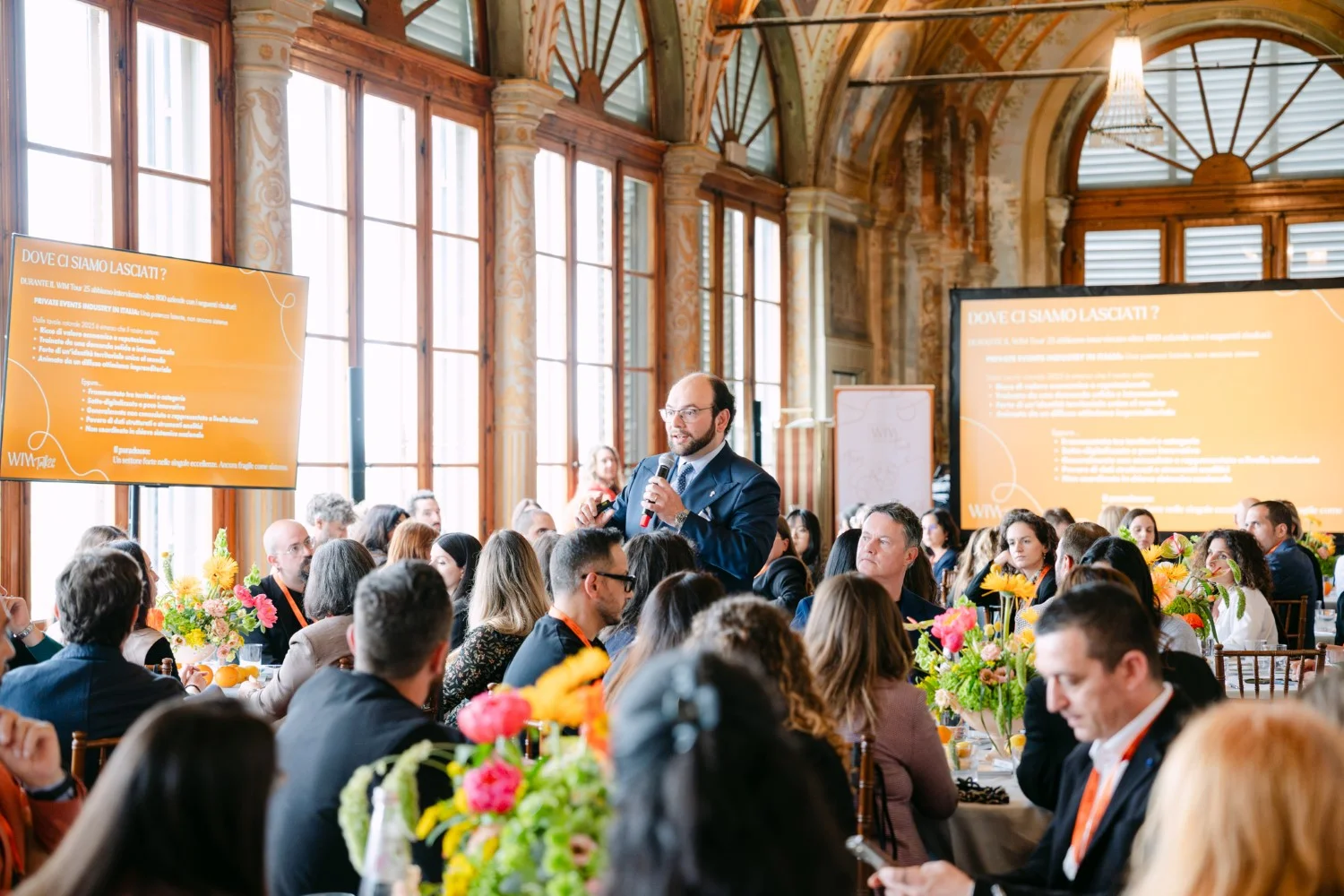
The private events industry calls for less rhetoric and more structure
From New York to Florence, the WIM Tour crossed different territories, markets and professional communities, gathering data, challenges and concrete visions for the future of the industry
Florence, May 2026 – There is one element that, more than any other, has run as a thread through the entire WIM Tour 2026: the increasingly clear demand to transform the Private Events Industry from a collection of fragmented professionals into a recognised, structured system that is fully aware of its own economic, cultural and territorial value.
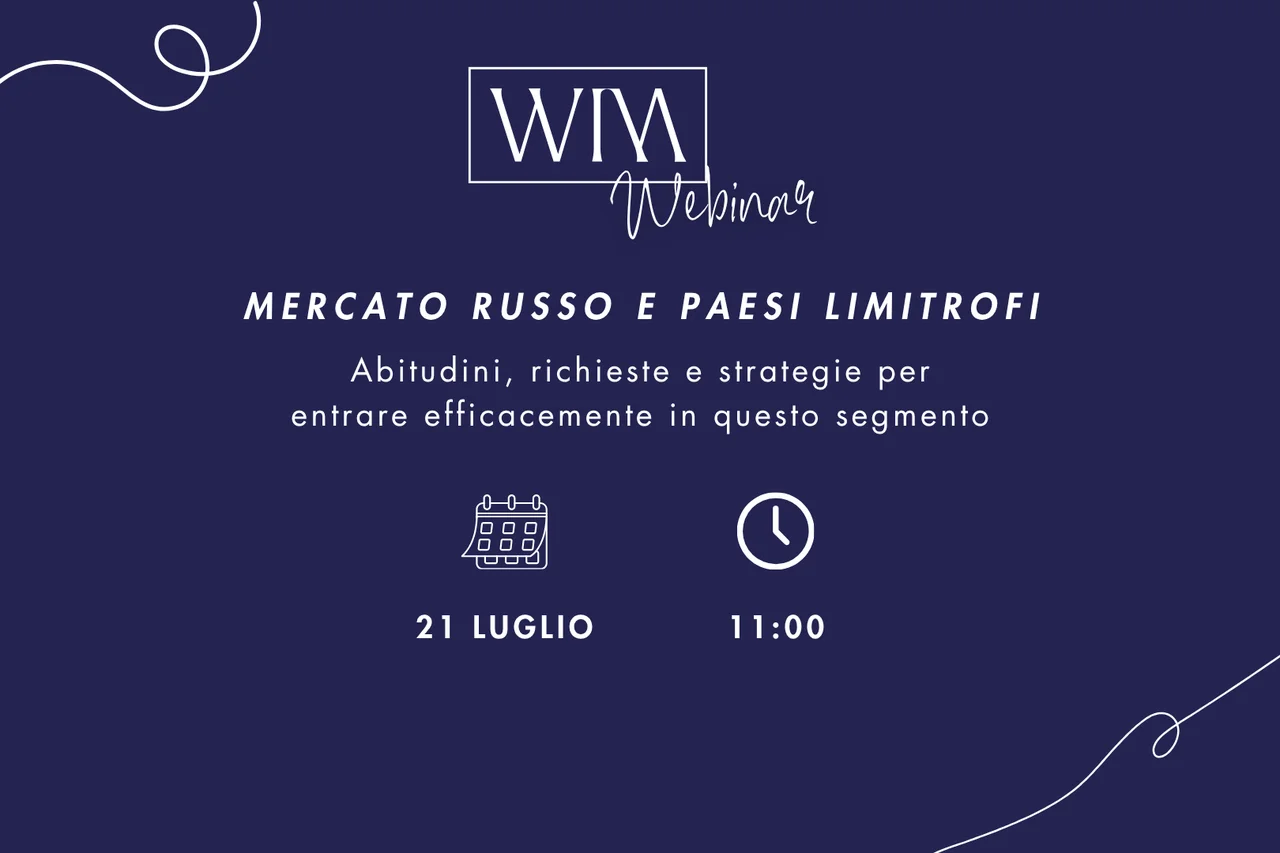
After months of meetings, roundtables and direct dialogue, the journey conceived by WIM concludes by delivering an exceptionally clear picture of the industry. A tour that crossed Italy from North to South and opened a conversation with some of the most strategically important international markets for inbound destination weddings – New York, Dubai, New Delhi and London – bringing together territories, cultural models, operators and institutions.
More than a series of events, the Tour took shape as a major exercise in field listening, with over 150 professionals met abroad and more than 1,500 companies engaged across Italy. Planners, venues, hospitality professionals, creatives, suppliers, territorial partners and public stakeholders all contributed to surfacing not only operational challenges, but above all a deeper shift: today the industry no longer feels the need to legitimise itself through aesthetics or luxury narratives alone. It is asking instead for concrete tools, shared standards, greater transparency and a more clearly defined professional identity.
THE INTERNATIONAL STOPS: WHAT GLOBAL MARKETS ARE ASKING OF ITALY
There is a common thread running through the four international stops of the WIM Tour 26 – New York, Dubai, New Delhi and London – and it has nothing to do with venues, budgets or current aesthetic trends. It is about the gap between what global markets expect from Italy and what Italy, today, is actually able to deliver.
Italy and "Made in Italy" continue to be recognised for creative quality, but what emerged from the international dialogue is a process standards level that is still not adequate: perceived as unclear and poorly documented, too often accompanied by slow and inconsistent responses, and by supply chains that are difficult to navigate for anyone coming from abroad and deciding whether to trust an operator they have never met in person. This is the gap between a country capable of producing extraordinary events and an industry that has not yet shifted into the right gear to communicate how it pulls them off.
New York demands transparency before creativity
The American market is among the most developed of those visited on the Tour. Those who choose Italy from New York do not do so because it is the easiest or most affordable option: the average spend for a wedding in the city exceeds $75,000–$90,000, and a destination wedding is a deliberate choice, weighted with meaning. Clients choose Italy precisely for this reason – and expectations are therefore high, precise and non-negotiable.
What emerged most forcefully was not the quality of the Italian product – which is recognised, even if never taken for granted – but the difficulty of working with Italian companies. Language barriers and a lack of operational transparency; perceived gaps in photography and video, still too oriented towards an Italian aesthetic that does not always speak to American tastes. Uncertainty persists around delivery processes, roles, responsibilities and the transparency of financial relationships between market players. The recurring feeling is that it is never quite clear who does what, when, and what happens when something goes wrong.
The American market does not ask for perfection – it asks for transparency. And Italy, on this front, still has a great deal of work to do. The most interesting finding, however, is that American buyers almost immediately recognised the value of WIM as a safe space: a place for authentic dialogue, free from commercial pressure, which turned out to be precisely what the market had been missing. The growing membership of WIM For PRO and registrations for WIMEvent26 from American agencies are a direct reflection of this.
Dubai: no room for approximation
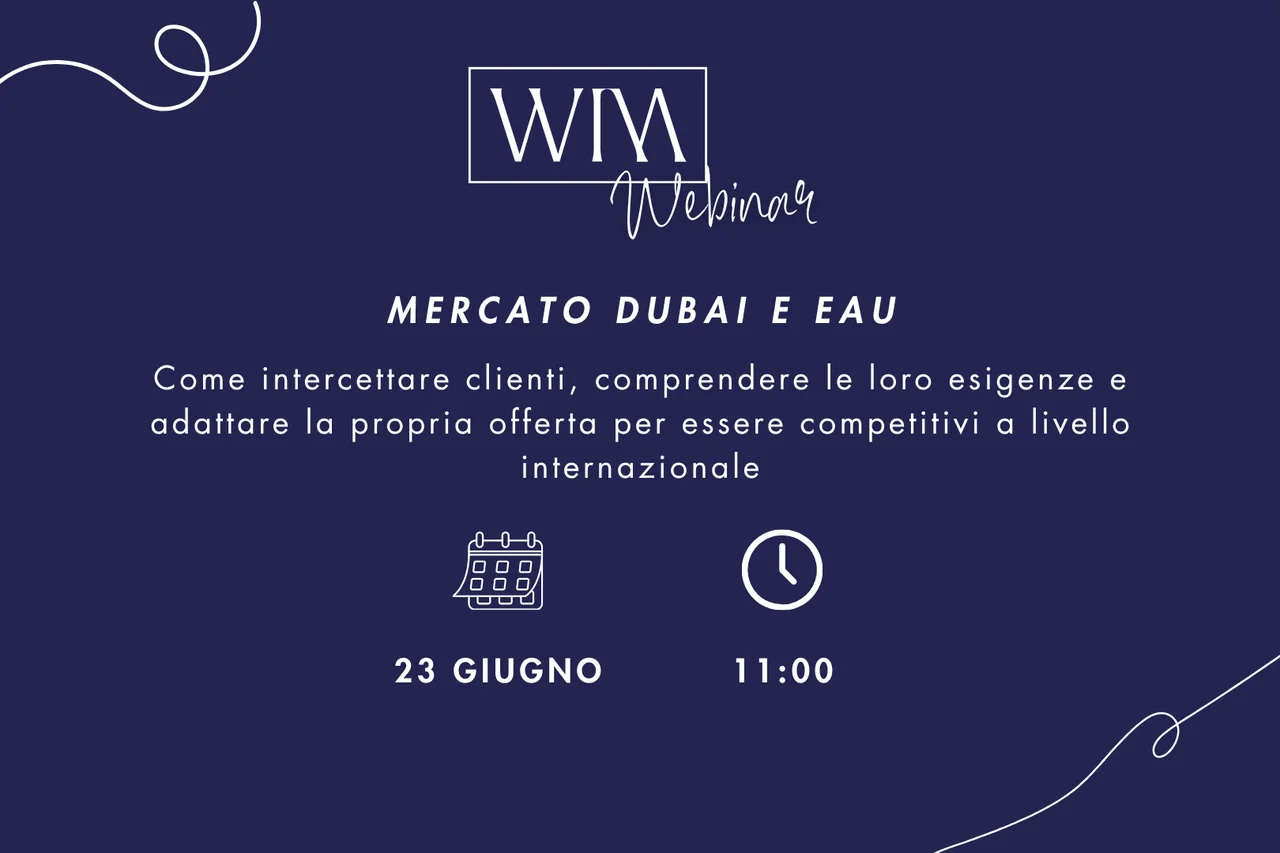
The Gulf has one distinguishing characteristic: very high spending power, which raises the bar on expectations accordingly. Those organizing luxury events in the Emirates are accustomed to suppliers who act quickly, respond promptly and do not make mistakes – because in that market, any gap between promise and delivery creates a breach of trust that is extremely difficult to repair.
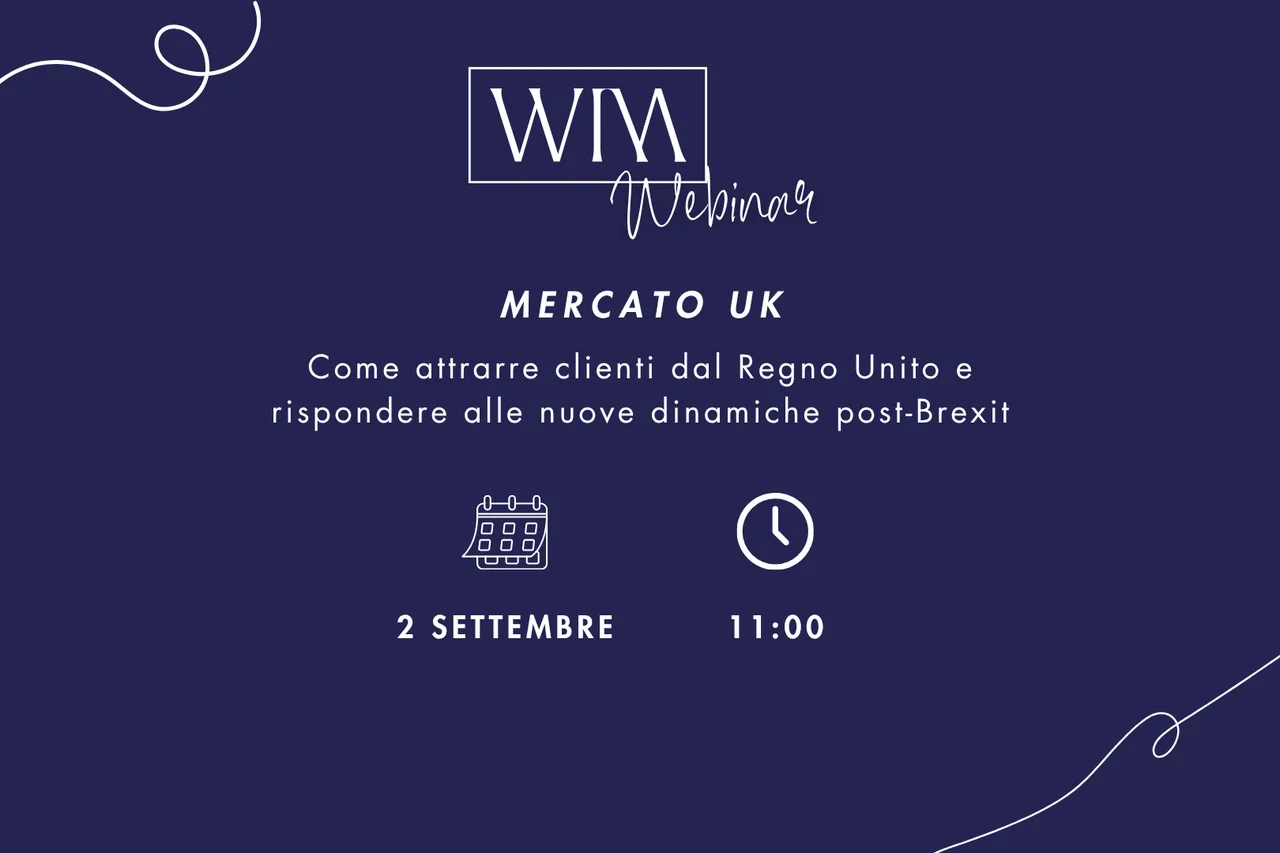
The Dubai stop brought together 35 professionals of diverse backgrounds – Italian, Arab, Lebanese and Indian – and the discussion surfaced a theme that would recur, with variations, at every subsequent stop: operational transparency and consistency between what is promised and what can actually be delivered. Not overstating one's own capabilities, not selling what one does not have, and ensuring that what is communicated matches what can realistically be executed.
Concrete challenges remain: the bureaucratic complexity of Italian visas, perceived as a barrier that often discourages interest from the outset; the difficulty of guaranteeing adequate staffing during peak season; service standards that do not always align with the expectations of a market where luxury is the only recognized category. That said, Dubai was also one of the markets that responded with the most enthusiasm to the WIM Event in November: attendance doubled between 2025 and 2026, signalling that demand is not only present but actively growing.
India: one of the world's largest markets – and, for us, the hardest to understand
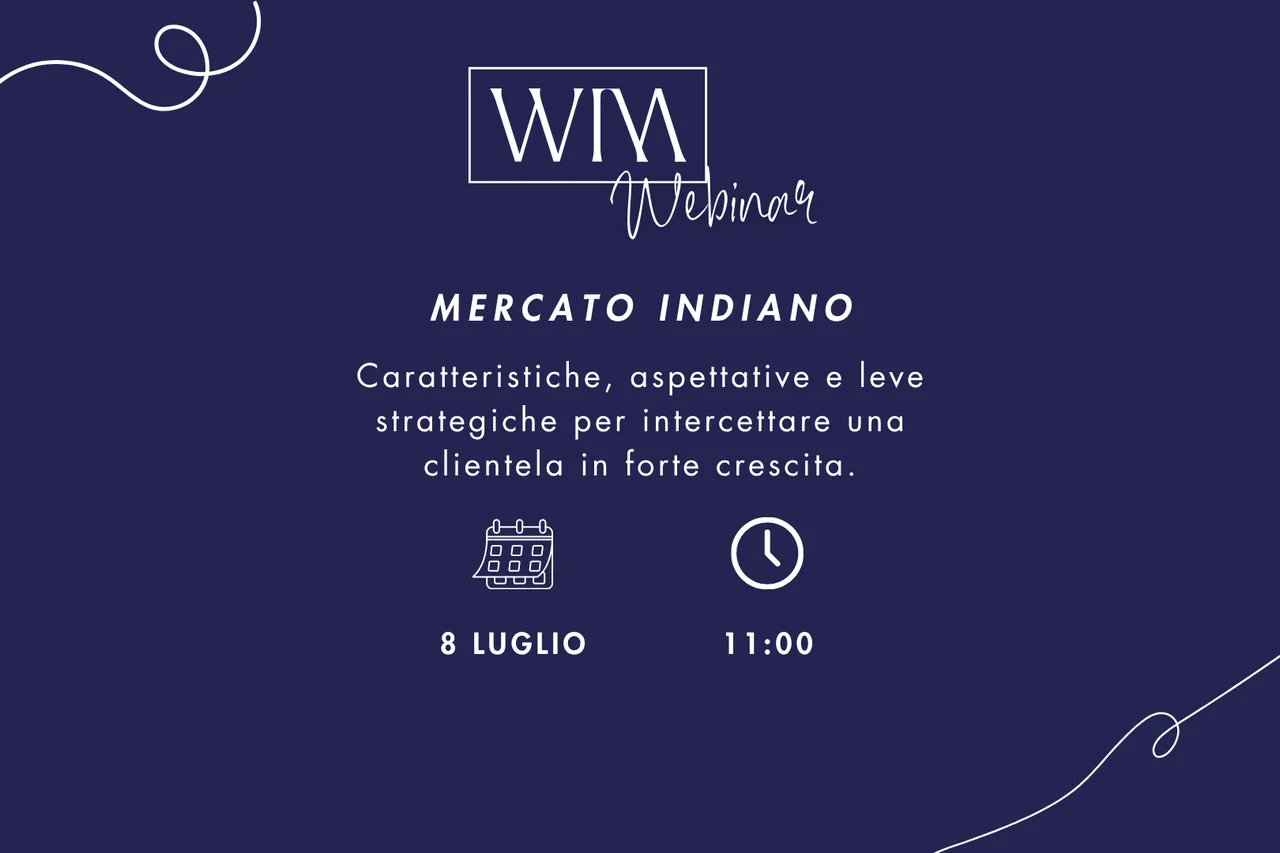
The Indian wedding market is a universe with no equivalent. With nearly 1.5 billion people, over sixty percent under the age of thirty-five and a significant upper and ultra-high-net-worth concentration in cities such as New Delhi, Mumbai, Bangalore and Hyderabad, India is probably the market with the highest growth potential for international destination weddings.
An Indian wedding is not an event in the way the Italian industry understands the term. It is a social, religious and family rite that unfolds over multiple days, involves hundreds or thousands of guests, follows collective decision-making logics and often turns into a race to the finish line. The Indian operational culture is accustomed to a degree of flexibility and tolerance for last-minute changes that clashes directly with Italian labour costs, planning timelines and contractual structures.
Italy cannot simply open itself up to the Indian market: it must learn to communicate its own timelines, limitations and working rules before the client arrives, not after expectations are already running high. It is also worth noting that a significant share of Indian demand comes from Indian families residing in the UK, the US and the Emirates – a segment with a strong Indian cultural identity but more hybrid, international decision-making processes that are often far more compatible with the Italian operational model.
London: where the European destination wedding was born
The British capital, a crossroads of cultures, nationalities and companies shaped by the English Empire and later the Commonwealth, has long been one of the principal source markets for clients who favour destination events. During the London stop, WIM had the opportunity to engage with dozens of professionals from the UK, India, Kenya, Nigeria, South Africa, Australia, Canada, Eastern Europe and Scandinavia.
Efficiency, transparency and cultural preparedness were the defining requirements raised by these professionals. Made in Italy remains an aspirational benchmark, but a tendency towards disorganization undermines confidence. Here too, those who win are the ones who manage – with understanding and flexibility – to offer a service that is clear and transparently communicated.
The notable difference from other markets was the emphasis on cultural preparedness: the ability of professionals not only to offer services that are authentically rooted in their own territory, but also to genuinely understand the differences and specific needs of clients coming from entirely different cultural contexts and traditions. A structured process of study and market analysis therefore becomes a highly valuable differentiator for those seeking to serve the high-spending international clientele that gravitates towards London.
13 ITALIAN STOPS: MORE THAN 1,500 COMPANIES, AN INDUSTRY CALLING FOR STRUCTURE
Across Italy, the WIM Tour covered territory from North to South, engaging more than 1,500 companies across thirteen stops – planners, venues, specialist suppliers, hospitality professionals and institutional stakeholders. The dialogue, built through over 300 thematic roundtables, consistently surfaced the same underlying tension: enormous market attractiveness on one side, and the absence of a shared infrastructure to support its growth on the other.
In major cities, the dominant themes were taxation, unfair competition, the need for common rules and the blurring of professional roles. In territories with a strong tourism vocation, the most pressing need was for better coordination of skills, a stronger and more legible identity for the local offering, and the development of more coherent and competitive destination models.
What emerged almost unanimously was a demand for shared quality standards. Operators are today calling for recognised professional training and continuing education, ethical codes of conduct, shared benchmarks, qualitative guidelines, national databases, verifiable reviews and greater professional accountability – all of them essential tools for protecting the value of the supply chain and reducing improvisation.
The theme of transparency ran through virtually every stop: transparency in fees and pricing, in contract terms, in the relationships between planners and venues, in operational responsibilities and in communication with the end client. This need comes alongside another very clear demand: genuine networking that goes beyond fragmentation, individualism and unproductive competition.
Several stops marked a genuine turning point. Sirolo, for example, demonstrated how structured territorial thinking can emerge from listening – bringing together Marche institutions, professionals and the academic world in a shared reflection on destination positioning. Florence, which closed the Tour by bringing it back to the territory where WIM was founded, served as the symbolic synthesis of the entire journey: the point at which listening, data, relationships and vision began to converge into a broader perspective for development.
WHAT THE MARKET IS ASKING FOR: THE WIM INSIGHTS 2026 SNAPSHOT
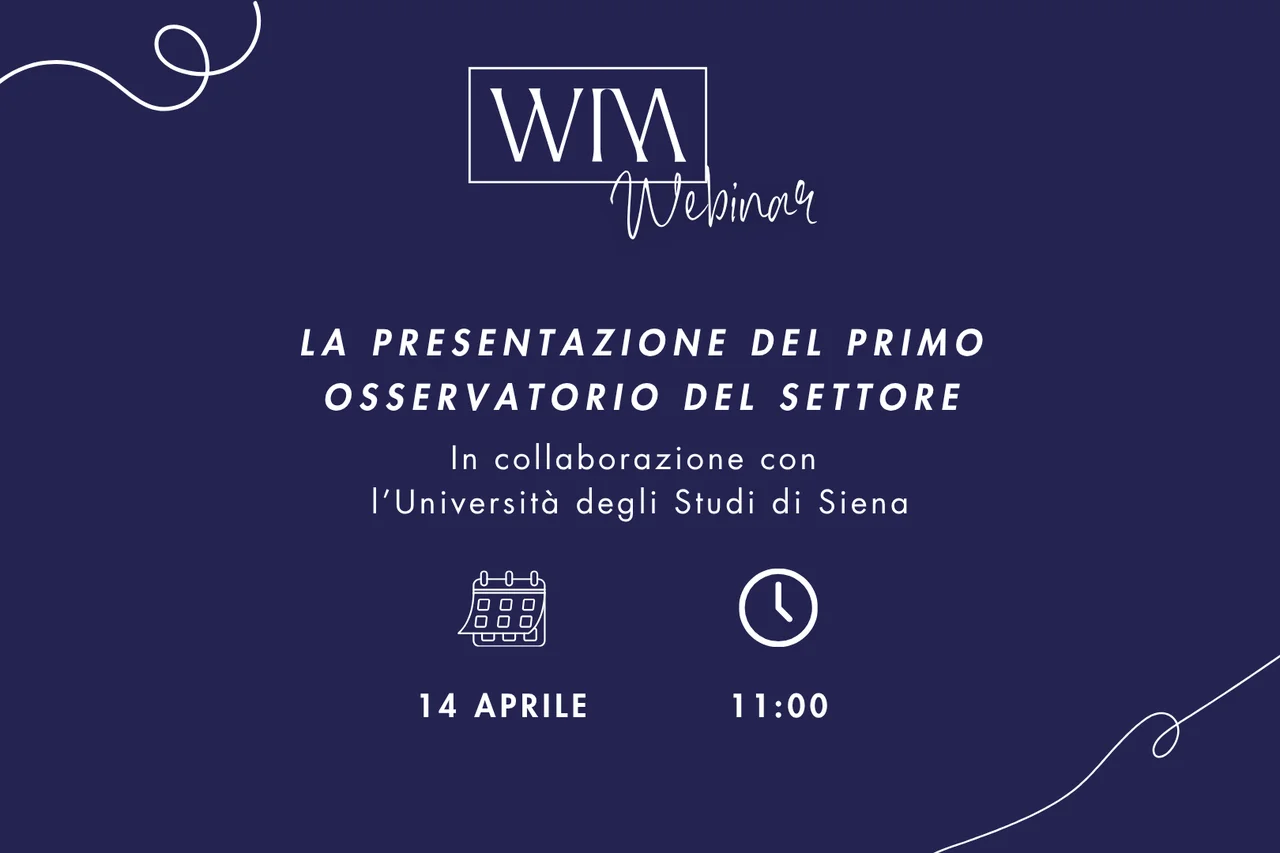
The overall takeaway from the WIM Tour – both in Italy and internationally – is that the industry is no longer asking simply for visibility. It is asking for structure. The WIM Insights 2026, developed in collaboration with the University of Siena, paints a picture of a highly fragmented ecosystem of over 50,000 businesses, 55 ATECO codes and 25 areas of specialization, in which only 14% of operators use advanced digital tools and 75% have no CRM. This is the symptom of an industry that has not yet developed the tools to present itself in a structured, legible way to markets that take such tools entirely for granted.
Investing in visibility and marketing is not enough if the underlying processes cannot meet the speed and precision that international markets demand. Having creative excellence is not enough if the operational standards are missing that would allow that excellence to be replicable, verifiable and perceived as reliable.
THE NUMBERS OF A RAPIDLY EXPANDING MARKET
The global private events segment:
- Global market: worth over $350 billion annually, with projected growth of 5–5% per year over the next decade. By 2035, the luxury segment alone could surpass half a trillion euros in annual global event spend.
- HNWI (High Net Worth Individuals): investable wealth above one million dollars has grown from 7–8 million in 2000 to 22–23 million in 2024. Asia-Pacific leads growth, rising from fewer than 1.5 million to approximately 6.5–7 million HNWIs.
- North America: remains the leading international source market for the Italian private events industry, accounting for 7% of international arrivals – a structural figure, not a cyclical one.
These are numbers that describe real, growing demand, spread across markets that look to Italy with genuine interest. Italy must be in a position to capture it.
"The most powerful finding of the WIM Tour 2026 is that the industry is no longer asking only for visibility – it is asking for structure. It is asking for tools, recognition, quality standards, training and the capacity to operate as a system. Over these months we have gathered very concrete needs, ones that are often shared across territories and markets that are deeply different from one another. This means the industry is entering a new phase of maturity, and that there is a real opportunity to build models that are more solid, more legible and more sustainable." – Tommaso Corsini, founder of WIM
Condividi questo articolo:
Diventa un
Digital Wimmer
Contenuti esclusivi, community e accesso anticipato agli eventi — tutto in un unico posto.




WIM For PRO · Where Ideas Meet
Sei già un
Digital Wimmer?
Community
Forum, directory e networking tra i professionisti del settore
Insights PLUS
Report esclusivi, WIM Survey e contenuti editoriali riservati
Priorità eventi
Accesso anticipato a tutte le tappe Tour, Talks e WIM Event
WIM For PRO · Where Ideas Meet
Are you already aDigital Wimmer?
Community
Forums, directories, and networking among industry professionals
Insights PLUS
Exclusive reports, WIM Surveys, and exclusive editorial content
Event priority
Early access to all Tour, Talks, and WIM Event sessions
Tutti i dettagli relativi ai vantaggi delle membership e al pricing dell’evento sono disponibili nel kit evento. Per qualsiasi necessità, assistenza o richiesta di approfondimento, puoi contattarci in qualsiasi momento scrivendo a info@wimforevents.com