
The Luxury Artisan: Creative Excellence and Burnout Risk. How to Evolve Without Losing Yourself.
The Luxury Artisan: Creative Excellence and Burnout Risk. How to Evolve Without Losing Yourself.
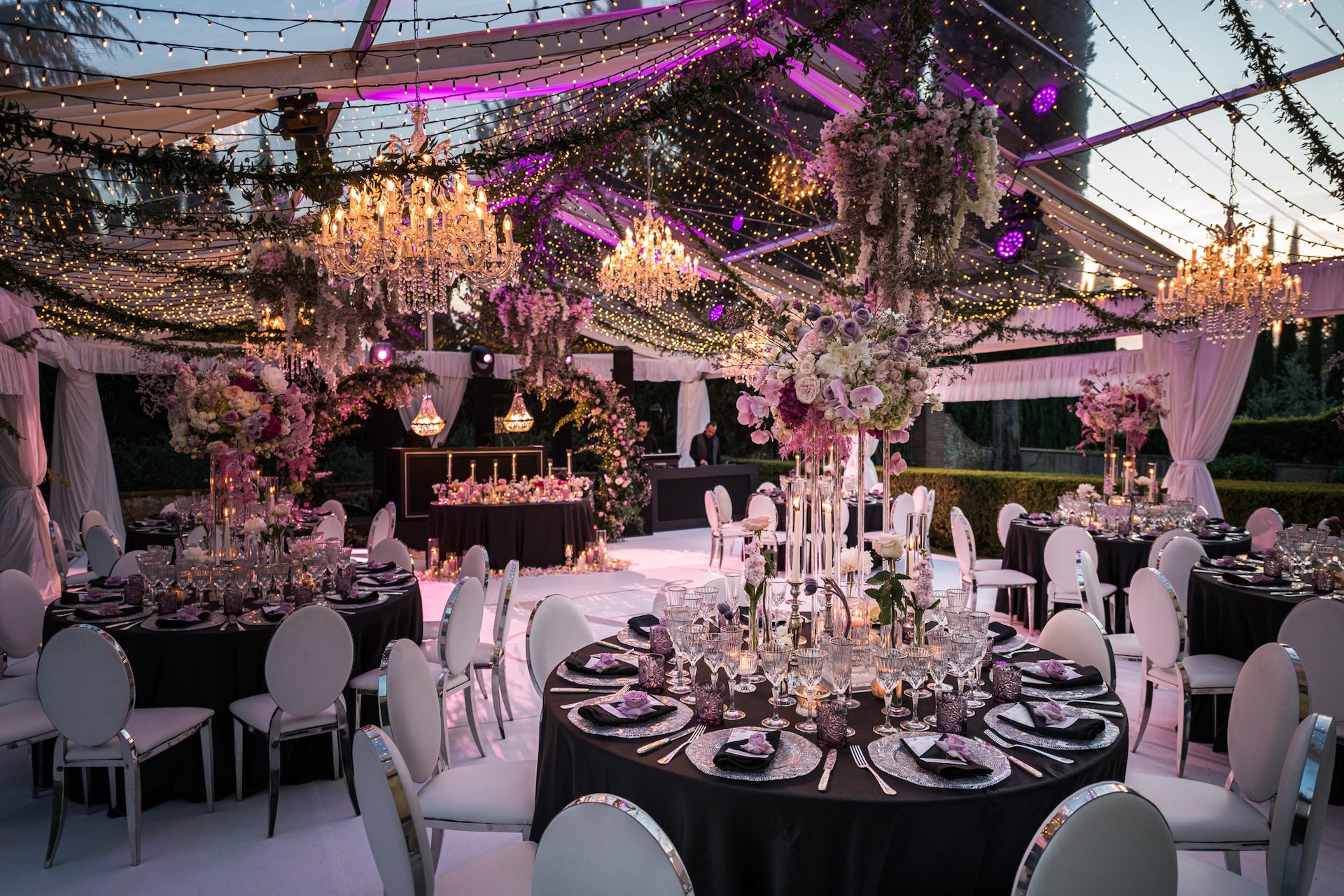
If you're a wedding planner with a one-year waitlist, if your clients fly in from New York or London to meet with you, if every wedding you organize is different from the last because you build it…
Condividi questo articolo:

If you're a wedding planner with a one-year waitlist, if your clients fly in from New York or London to meet with you, if every wedding you organize is different from the last because you build it from scratch every time — you are almost certainly a Luxury Artisan.
Profile 1, identified by the University of Siena's K-means clustering analysis, is the most immediately recognizable profile in the industry. It's the wedding planner who has chosen not to grow in volume, to stay small in order to stay excellent. It's the floral designer with an aesthetic so recognizable that clients come to him and not to anyone else. It's the boutique consultant managing 8-10 events per year, for clients who want only him.
This profile is precious. It commands a market segment that structured companies cannot touch. But it has specific vulnerabilities, and understanding them is the first step toward evolving without betraying your DNA.
The Strength: Radical Differentiation
The Luxury Artisan wins on three levers that no competitor with corporate structure can easily replicate.
The first is deep personalization. Every project starts from scratch, built on the specificity of the client — their story, their values, their aesthetic. There is no "standard package" of the Luxury Artisan. There is the wedding of Sophie and James, which doesn't resemble the wedding of Priya and Arjun, which doesn't resemble any other.
The second is perceived exclusivity. Being scarcely available — few clients per year, a waitlist — creates an aura of exclusivity that increases the perceived value of the service. The HNWI client who must wait six months for an appointment knows they are accessing something special.
The third is the deep human relationship. The Luxury Artisan knows their clients as people, not as orders. They know their names, the story of their relationship, their fears and their dreams. This level of relationship cannot be built while managing 50 events per year.
The Main Risk: Operational Burnout
The critical point of the Luxury Artisan isn't the market — it's the operating model.
The structural problem is this: all business functions — sales, creative design, supplier coordination, client management, documentation, logistics, accounting — are concentrated in a single person or in a very small team. When excellence in each of these functions depends on the same person, cognitive and operational load grows non-linearly with the number of events.
The practical result: in peak months, the Luxury Artisan is overloaded. They reply to emails at 11 PM, manage emergencies the day before the event, don't sleep the nights leading up. The creative excellence clients pay for is produced under conditions of mounting stress.
And when burnout arrives — and it does arrive — quality drops at exactly the moment when reputation is highest. It's the paradox of success without structure.
The Evolutionary Trajectory: Structure Without Losing Identity
The good news is that the solution doesn't require becoming a corporation. It doesn't require hiring ten employees or multiplying event volume. It requires building a minimal structure that frees creative time and reduces cognitive load.
Step One: Adopt a Minimal but Impeccable Digital Stack
A simple CRM or an entry-level version — to track all leads, contacts, conversations, quotes. Not to become a sales machine, but to stop depending on memory to know where each negotiation stands. A calendar shared with collaborators. A professional proposal template. These three tools eliminate 70% of non-creative operational load.
Step Two: Build an Ecosystem of Trusted Suppliers
The Luxury Artisan doesn't need to internalize everything. They need a network of complementary suppliers — caterer, photographer, floral designer, audio service — who share their standards, with whom they have a consolidated trust relationship. This network is the alternative to organizational growth: it allows you to offer an integrated ecosystem without structuring a complex company.
Step Three: Position "Curation + Method" as an Explicit Value Proposition
The HNWI Aspirational High-End segment — patrimony $1-5M, event budget €20-100K — seeks reassurance and process transparency in addition to the beauty of the final result. Explicitly communicating the method — how you work, what the project phases are, what gets delivered and when — doesn't reduce the Artisan's value. It increases it, because it answers a need for certainty as strong as the need for beauty.
Step Four: Treat Privacy and Confidentiality as Service Components
For the UHNW segment, privacy and confidentiality aren't optional — they are non-negotiable requirements. Having standard NDAs, documented confidentiality protocols, clear social media and photography policies — these tools don't only protect the client, they signal to those working with the highest-profile clientele that you're ready to work with them.
Continua a leggere...
Questo contenuto è riservato. Accedi alla nostra piattaforma per leggere l'articolo completo.
Prosegui su WIM for ProRead more...
This content is for members only. Log in to our platform to read the full article.
Proceed to WIM for ProCondividi questo articolo:
Diventa un
Digital Wimmer
Contenuti esclusivi, community e accesso anticipato agli eventi — tutto in un unico posto.




WIM For PRO · Where Ideas Meet
Sei già un
Digital Wimmer?
Community
Forum, directory e networking tra i professionisti del settore
Insights PLUS
Report esclusivi, WIM Survey e contenuti editoriali riservati
Priorità eventi
Accesso anticipato a tutte le tappe Tour, Talks e WIM Event
WIM For PRO · Where Ideas Meet
Are you already aDigital Wimmer?
Community
Forums, directories, and networking among industry professionals
Insights PLUS
Exclusive reports, WIM Surveys, and exclusive editorial content
Event priority
Early access to all Tour, Talks, and WIM Event sessions
Tutti i dettagli relativi ai vantaggi delle membership e al pricing dell’evento sono disponibili nel kit evento. Per qualsiasi necessità, assistenza o richiesta di approfondimento, puoi contattarci in qualsiasi momento scrivendo a info@wimforevents.com